Indigenous wedding fashion in Chittagong Hill Tracts shifts from waist-loom reds and blacks to modern fusion outfits | how Chakma brides trade hand-woven tradition for contemporary wedding wear | revival of traditional CHT textiles as young couples mix heritage and modernity | what changing wedding styles among hill-tribe communities reveal about identity and culture | How indigenous weddings are blending tradition with modern style


Photo: Orchid Chakma
“>

Photo: Orchid Chakma
Indigenous weddings in the Chittagong Hill Tracts have always stood apart from any other weddings in Bangladesh. They were smaller, simpler, and more intimate, but deeply rooted in tradition. The focus was never on extravagance, but on community, identity, and the handwoven textiles that carried generations of cultural meaning.
For decades, these weddings were defined by waist-loom garments in predominantly red and black, crafted by the family members of the groom to adorn the bride.
 For all latest news, follow The Daily Star’s Google News channel.
 Photo: Orchid Chakma
“>

Photo: Orchid Chakma
Mishi Chakma, designer and owner of The Fairy Tale, has worked closely with the Chakma community on wedding attire. And she has observed this shift firsthand. According to Mishi, earlier weddings were deeply shaped by the family’s own craft. “Contentment was abundant, and beauty was measured in authenticity,” she explains.
Brides typically wore handwoven waist-loom pieces made within their own households, and colours were limited.
Photo: Orchid Chakma
“>

Photo: Orchid Chakma
“It was always red and black,” she notes.
Those garments were worn as statements of identity, skill, and connection to one’s lineage. However, as lifestyles changed, so did the practice of weaving. Many young women today no longer learn the craft, and it has become increasingly rare to give a hand-woven wedding outfit to the bride.
Photo: Orchid Chakma
“>

Photo: Orchid Chakma
“These days, it is very unlikely that a family member would have the time to weave a wedding outfit,” Mishi says. “And it is precisely when they seek out stores and designers.”
What was once a household skill gradually became a service industry, with local weavers selling garments in village markets to support their families.
Photo: Orchid Chakma
“>

Photo: Orchid Chakma
The shift toward Bengali wedding wear in the 1980s and 1990s also played a significant role. The Benarasi saree, long celebrated across Bangladesh, grew into a symbol of sophistication in the hills. Wearing one signalled modernity and participation in a wider national trend. Later, the influence of television and cinema exposed indigenous communities to even more elaborate wedding fashions like heavily embellished lehengas, structured gowns, sherwanis, and matching sets that mirrored Bollywood grandeur.
With each passing decade, the indigenous bridal aesthetic evolved into a blend of local heritage and external influence. However, over the last few years, Mishi has seen a noticeable return to traditional weaving techniques, fabrics, and motifs.
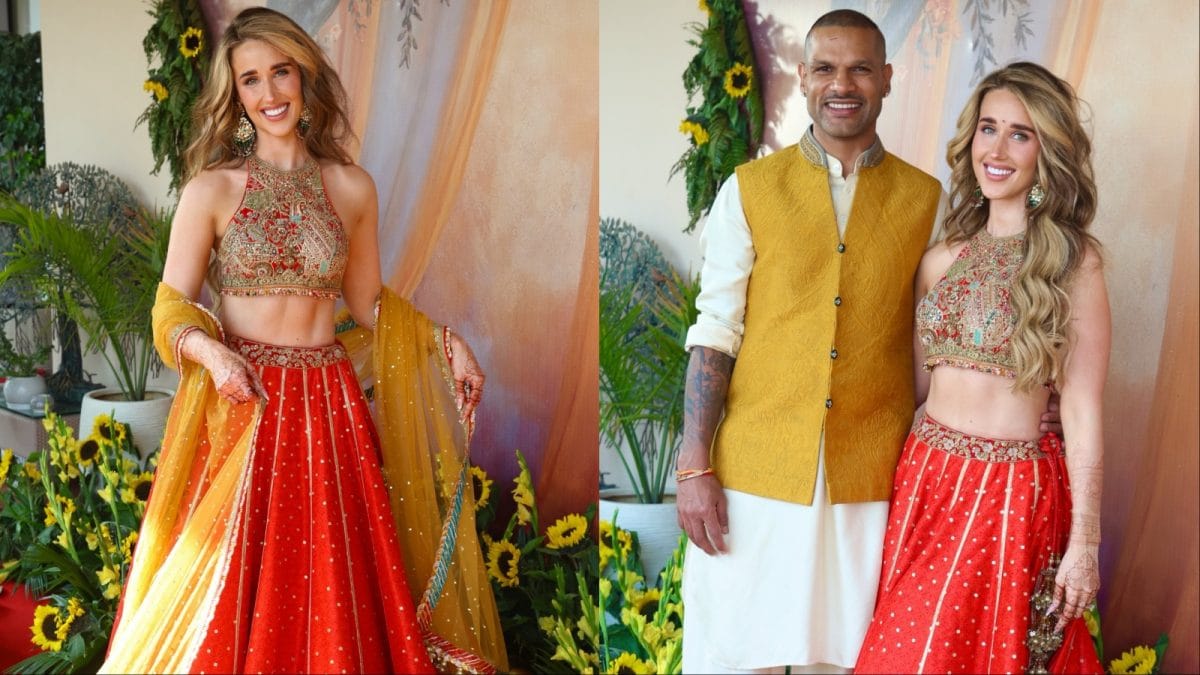
“Modern brides are blending heritage with contemporary flair,” she states. This includes using handwoven textiles but cutting them into updated silhouettes, adding subtle embellishments, or combining traditional patterns with fabrics like tissue or muslin.
Photo: Orchid Chakma
“>

Photo: Orchid Chakma
The new direction is not about recreating the past exactly as it was. It’s about embracing identity in a way that feels relevant to the present.
“Education and awareness play a big role,” Mishi explains. “People now understand that celebrating one’s roots is perhaps the best way to honour tradition.”
This awareness has created a ripple effect; brides who might once have opted solely for Benarasi or Bollywood-inspired looks are now requesting outfits that incorporate pinon-hadi, Rinai-Risha, Thubuing and other culturally significant elements. However, the silhouettes are evolving, paired with contemporary-cut blouses, sheer veils, draped dupattas, or subtle karchupi and zardozi details. The intention is not to overpower the weave, but to complement it.
For grooms, there is a parallel movement. Traditional menswear, once limited in variety, is being reimagined using waist-loom textiles and rayon silk. Panjabis, sherwanis, prince coats, and waistcoats are being crafted with patterns and colours that honour indigenous heritage while appealing to modern tastes. The shift represents more than just aesthetic preference; it signals renewed pride in cultural representation.
Photo: Orchid Chakma
“>

Photo: Orchid Chakma
What makes this particularly so meaningful is that it stems from choice, not necessity. The younger generation of the CHT is increasingly mindful of cultural preservation. While they may be influenced by global fashion, they are equally motivated to retain the distinctiveness of their roots.
Weddings, being the most significant communal event, have naturally become the platform where this balance is most visible.
Ultimately, the evolution of indigenous wedding fashion reveals a story of resilience and rediscovery. It reflects a community navigating the complexities of modern identity while holding firmly to the threads of the past. The colours may be expanding beyond red and black, and the silhouettes may be shifting, but the cultural heartbeat remains unchanged.
In the end, the new generation of indigenous brides and grooms is not choosing between tradition and modernity; they are weaving both into something uniquely their own.
Wardrobe: The Fairy Tale
Designer: Mishi Chakma
Models: Joyee, Noisho, Purna, Misti, Kafu, Camelia
link